Home | Posts | Without Sin – Part 1
When it first occurred to me sometime around 2001 that nearly all the language about God’s creative acts is written in the past tense, I was stunned. It was around that time that I began taking classes with the late Dr. James Cutsinger, then the undergraduate director of Religious Studies at my alma mater, the University of South Carolina.
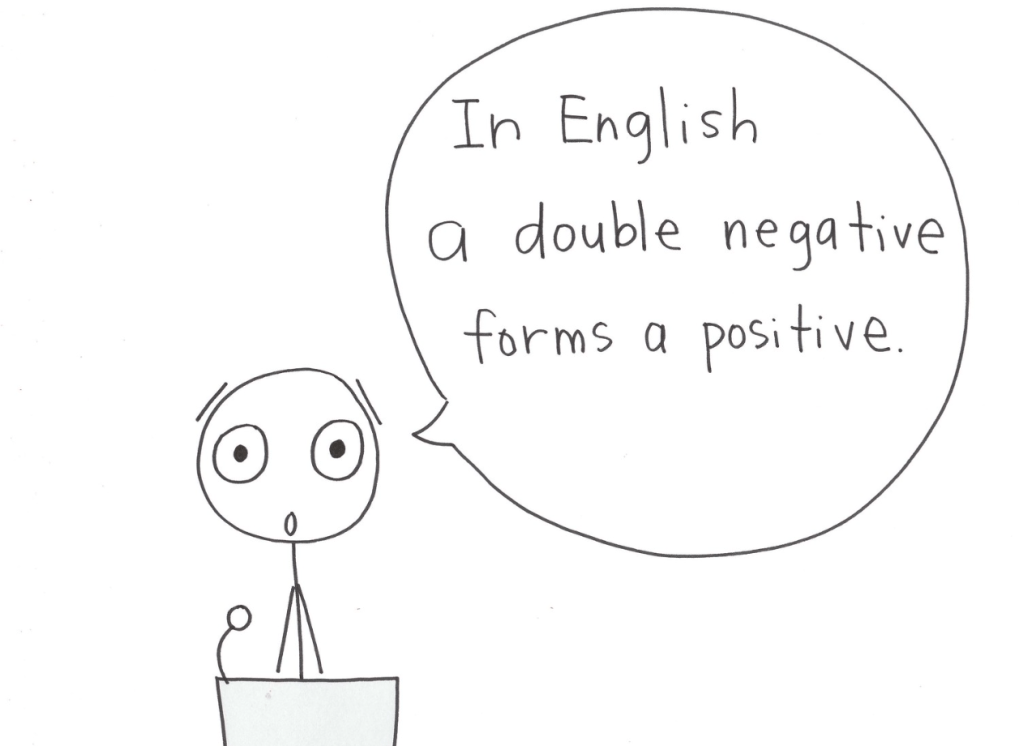
To this day, I carry one of the earliest and most profound lessons I learned from him, which he called the Divine Double Negative. I can’t say for certain that he coined this term, and in fact wouldn’t be surprised if he picked it up from the French philosopher and theologian Frithjof Schuon, but since I can’t find the term with Google, I’ll attribute it to him.
I can still hear him today saying something along the lines of, “the character of God is so constant that when God speaks, existence exists where it was not. There is nothing God cannot do, but the constancy of God’s nature means that there are things God cannot not do if they’re in God’s nature. If God is Love, God is never not loving. If God is Creator, God is never not creating.”
The Divine Double Negative changed my entire theological outlook because, if God cannot not create because it’s God’s nature to create, then creation isn’t ever finished as long as there is God. Cutsinger shared that some thinker, probably some Orthodox Desert Father, theorized that creation sprang into existence in whatever instant God began. If God is eternal, then in some fundamental tangible way, so is creation. This is puzzling because what we see, feel, sense, and measure in creation is so utterly finite. With this in mind, it’s rather seductive to follow this thought to the conclusion that if creation coexists eternally with God, then creation is God, kind of like the cells, flora, fauna, and various organs and ecosystems of our body is what makes each of us each of us.
This may work better in a tradition in which creation is a necessary consequence of God’s existence. In Hinduism, existence flows from the heart of Brahman like water from a fountain. In this sense, calling it creation feels somewhat misleading. It’s less an active process that requires intentionality than it is the sweat dripping from Brahman’s brow. Calling something a creation seems to imply effort, thought, planning, execution. Creation seems to require a vision of what will be, or at the very least what could be. This is a difference in working within a Christian paradigm, but I believe this idea of intentionality is a fundamental difference akin to water falling or being poured into a cup. They have essentially the same outcome, but the difference is vast.
While existence itself may indeed be a consequence of God’s existence, creation is something of God.
God is not creation and creation is not God. Creation is the work of God, and God cannot not be about this work because whatever God intends becomes. This is an interesting idea to me because there are a lot of different ways thoughts come to me. Some I try to think, but can’t. Some I want to think, but don’t. Many come unbidden from someplace adjacent to my willful reflection, but not from my own intention. Words like this have formed in my head many times, I’ve spoken them many times, but I’ve never written them down with this intentionality before now. At least in the context of the Divine Double Negative, this reveals something else fundamental to God’s nature.
God is intentional.
It sounds a little silly to say because I think it’s kind of assumed in our talk about God in most circumstances. It’s important though, because it’s different than saying things like “God doesn’t make mistakes” or other cliches people say without much thought behind them when put into the context of the Divine Double Negative. God cannot not be intentional is so much different, because it allows for one other constant in the nature of God.
God is constant, yet dynamism is the definition of God’s constancy. God is always creating, and creation never stands still. Creation is always moving, evolving, exploding and compacting, heating and cooling. Lungs breathe, earth orbits, stars collapse, and in the midst of all this constant dynamic existence, God cannot not do new things.
God’s dynamic constant is what actually undergirds my own expressed and considered faith at this point in my life. The abusive construct of that old white-bearded dude in the sky stalking our sins like an angry abusive father is abhorrent to me. I can’t stomach the idea that God’s love can be defined by anger unresolved by anything other than the murder of his son must be heresy. If God cannot not love, the God cannot be so possessed by such covetous behavior as holding, feeding, carrying, and nursing a grudge. A grudge brings nothing new. A grudge is a millstone dropped in tides long gone.
Love itself is dynamic. Love isn’t a one-sided affair, but always a dance between people in relationship in which we give and receive, share hurts and hopes. Love is messy, organic, and always changing. Love is always something that exists in multiple locations because it cannot be centered only in one person without becoming something less than love. Love is dynamic because there is no love that doesn’t affect the lover and the beloved. Love makes us vulnerable because it opens us to our beloved, beckons our heart to come out, and calls us to stand nakedly before them without the armor of our words or egos, but just as we are.
God is love, God cannot not be loving.
Love is vulnerable. God cannot not be vulnerable.
The cross is God’s incarnate vulnerability expressed by Word made flesh.
If God loves what God is creating then God is affected by creation. Golgotha is where sacred and secular eternally meet, mixing the bloody, shitty, wounded Land of the Crucified with the hope of love’s recovery even as love hangs crucified. Love is always life and death, taking and holding a breath, hoping against rejection and fearing its possibility. Love is risk and reward, and because love cannot exist in one party alone, love is messy.
God is Creator. Creation is a mess.
God is love. So it turns out that God loves a mess.
 Unfair Linen
Leave a comment